
How Palestinians in diaspora are finding resilience through pain by honoring their cultural heritage
WORDS BY Anonymous
EDITED BY BRE GEORGES
As a genocide survivor who recently relocated to New York from Gaza—the open-air prison—last August, I was wondering what it means to be Palestinian from the perspective of Palestinian-Americans. Is there a space that connects them with Palestinian identity? What is it? How are they supporting the homeland? What challenges are they facing during the ongoing genocide?
In September of 2024, I opened Google and began searching for pieces of information about spaces for Palestinian-Americans in New York and New Jersey. I was surprised by the good quantity of websites I found. So, I clicked on one of the links that triggered my attention, and that led me to the Palestinian American Community Center (PACC). PACC is a non-profit organization and community space established in 2014. From the user interface, I was able to identify it was an online space for Palestinians, not before I saw an address in Clifton, New Jersey. As you know, a writer and journalist should have curiosity in their framework, delving deeply into the details of what their story is about. I decided to embark on this adventure for the first time and pay a visit to them.
Once I arrived there, I saw a well-organized group of five young Palestinians standing in a well-lit community center hall. The girls’ clothing was very mesmerizing: elegant, long, embroidered dresses that represent where they are from in Palestine.
There were gorgeous young girls with braided hair in the middle of the line, wearing long, loose, white embroidered thobes (dresses), adorned with red square chest panels and floral motifs.
Since curiosity is one of my characteristics as a reporter, I approached one of the girls and posed my question to her, “Which city does your thobe represent?” She smiled and clarified, “This thobe is Yaffawi; this means it represents my city Yaffa, Palestine.”
The boys wore black pants with wide belts and leather shoes. They were covering their heads with Palestinian black and white kuffiya (a traditional headdress).
For the first few moments, I thought they were acting in a play. It wasn’t until I heard the lyrics “W ala dalouna w ala dalouna,”—a clip from the Palestinian traditional song “Dalouna”—that I began nodding my head gently, as the song had me spellbound. With their hands held on one another’s shoulders, I observed them as they stepped forward, forming a line. Their left feet crossed over their right feet multiple times before they transitioned into turns, twirls, and knee lifts.
They were dancing Palestinian Dabke, a Levantine folk dance that channels sentiments of outrage, sorrow, pride, and resilience, definitive of Palestinian struggle since 1948. As the dancers spun and stomped, Palestinian flags hanging on the surrounding walls fluttered. These dabke sessions take place weekly as part of the regular programming at PACC, a space established in 2014. PACC offers educational, cultural, and social programs celebrating Palestinian heritage––breathing life into the minds of Palestine’s future generation—and supports the Palestinian diaspora in New Jersey and New York.
They were dancing Palestinian Dabke, a Levantine folk dance that channels sentiments of outrage, sorrow, pride, and resilience, definitive of Palestinian struggle since 1948.
Palestinians in exile are accustomed to witnessing their families in the homeland constantly haunted by a pervasive feeling of fear for their safety, dreading anything that could hurt their flesh and blood there.
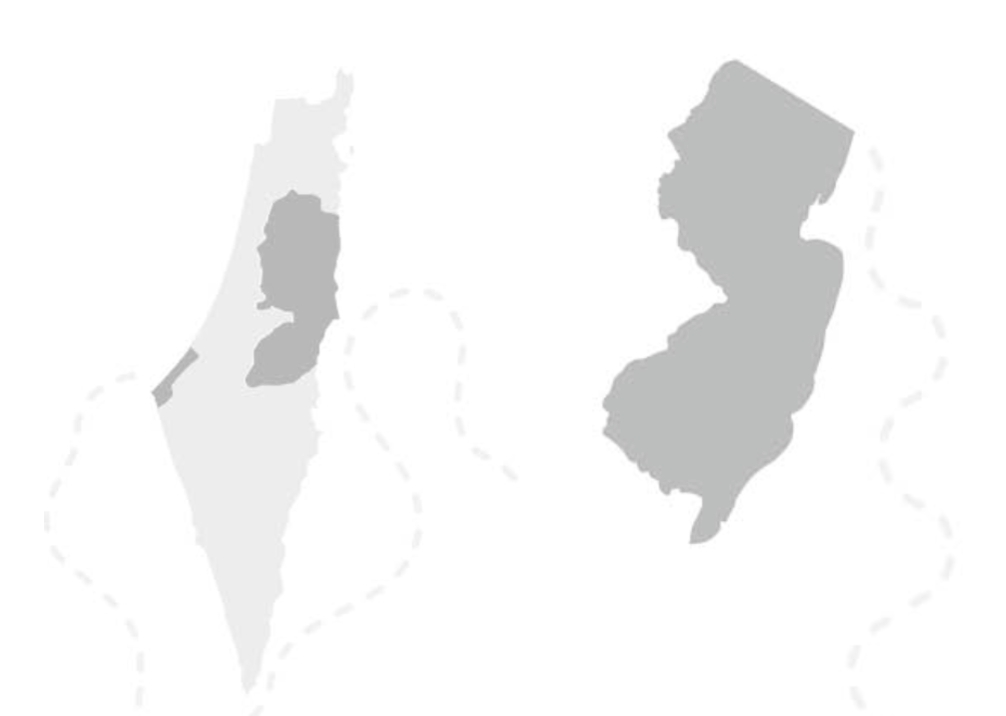
In late 2023, at the onset of the full-blown genocide perpetrated by the rogue Israeli system on the mere 365 km² (141 sq mi) strip of land, Gaza, the lives of the Palestinian-American families were turned upside down in horrific ways.
Having been gripped with this incomprehensible fact, diaspora Palestinians can clearly state they have been unable to sleep due to the grim reality that their families are not safe even in their homeland. It has been more than a year, and their families and friends still endure the unending slaughter, settlement expansions, forced displacements, famine, indiscriminate bombardments, and repetitive cycle of ground offensives.
Yes, I can deeply relate to their feelings!
I feel their excruciating pain since I myself am a Palestinian from Gaza, who lost both my mother, a UN worker, and my sister, a physiotherapy doctor, after several relentless Israeli aerial attacks that indiscriminately targeted our densely populated area with impunity.
I experienced firsthand what it means to watch your own family and relatives living inside makeshift tents, being slaughtered, and enduring months of cold, famine, and suffering from the buzz of the drones striking on a daily basis.
With a heavy, broken heart, I always ask myself the same questions every night before I try to sleep: “Did my family find something to eat that might keep them alive? How many hours did my ten-year-old brothers’ thin bodies endure the freezing weather while surviving on only two sixteen ounce bottles of water? Where did my family seek refuge after their tent leaked water from the heavy rains? Will they survive? Will we ever be reunited again?”
Palestinians in exile are accustomed to witnessing their families in the homeland constantly haunted by a pervasive feeling of fear for their safety, dreading anything that could hurt their flesh and blood there.
I have a profound sense of shame whenever I go to a restaurant, take a warm shower, or even lie down on a bed and with a thick mattress, while my family in the open-air prison lacks these fundamental necessities. To this day, Palestinians in Gaza have lacked basic necessities like hot water, and have been suffering under a famine. That is why I have been eating only what they eat and have been taking a shower with cold water.
Due to the shortage of telecommunication networks in Gaza, it is a rare, lucky day when I hear my dad’s voice on a brief, one-minute international phone call once every three weeks. “Dad, are you all alive? Where are you now?” I ask with a trembling voice.
From the perspective of Palestinians in the US, the term “diaspora” not only signifies a mere physical exile, but also the excruciating sentiment of being stripped of Palestinian identity—as decapitating the head of the body.
For Palestinians in the diaspora, holding on to their Palestinian identity is not only a way of exhibiting their nationality; it’s also a way to keep the dream of a free Palestine alive amidst Israel’s ongoing genocide of Palestinians living in Gaza. Diaspora Palestinians keep the dream of a free Palestine alive however they can while thousands of miles from home. And in this journey, PACC plays a crucial role.
At its early stages, PACC consisted of fifteen board members, led by the board president Diab Mustafa and his daughter, the executive director, Rania Mustafa.
Basma Bsharat is a Palestinian-American, born and raised in New Jersey. Her family originates from Ramallah, in the beating heart of the occupied territories. Like thousands of our Palestinian families, Basmas relatives were expelled from their homes in Palestine during the 1948 Nakba, or “catastrophe,” when Israel razed and occupied historic Palestine, displacing over 750,000 people.
Basma and her family began attending events at the community center in 2012, believing it would serve as a solid foundation for rich cultural and traditional Palestinian gatherings. To Basma and her family, this center became their haven, where Palestinian-American families congregate to tell their stories to one another, forge deep connections, and participate in cultural festivals that delve their roots deeper into their heritage and where they belong.
September marked Basma’s first anniversary as Palestine Education Director at the center. “Before I was a full-time staff member at PACC, I was part of the community. My family and I always made sure to attend events at PACC. When we go there, we feel proud of our heritage and culture,” she said.
“What is really unique about PACC is that it is for everybody from the babies and the youngest to the elderly.”
As of press time, in early April, PACC’s annual conference is about to begin. With a compelling and distinct theme centering the power of activism, the conference will include youth engagement activities, workshops on Palestinian identity and resilience, and discussions on sustaining activism for liberation.
Over the past years, PACC has launched numerous programs that aim to educate Arab Americans about Palestine. The Homeland Project is a monumental initiative aimed at strengthening the identity of Palestinian-American children by organizing yearly trips to Palestine. Through these journeys, they connect with their Palestinian roots, hear stories filled with love, anguish, happiness, and courage, and visit numerous historical and religious sites in Jerusalem, Hebron, and other Palestinian cities. This firsthand experience empowers Palestinian-Americans with a stronger voice. Witnessing unfiltered realities on the ground and learning about their heritage and historical events help them share authentic stories and challenge the occupation’s attempts to distort and erase the Palestinian narrative.
Tatreez (stitching) classes and workshops— like Dabka—is another way to weave together the past and present. It preserves the vibrant tapestry of Palestinian embroidery. Tatreez, a centuries-old art form, is like a thread that binds generations, with its colorful stitches narrating stories of resilience and heritage, beautifully etched into Palestinian textiles.
PACC’s diligent work also went beyond on-site initiatives—it launched profitable online courses tailored to high-school students. For instance, Hold Onto Palestinian Existence (HOPE) is one of PACC’s online courses that are predominantly concerned with enlightening participants about Palestinian history, culture, traditions, and the broader context of social justice issues. HOPE seeks to inspire students to be ambassadors of Palestine through their advocacy for Palestine and other marginalized communities.
To Palestinian-American families, this evokes deep emotions of pride and perseverance. Our flag doesn’t just wave in the wind; it waves in the hearts of these families, reminding them of their roots and heritage. The Palestinian Dabke program is only one of many rich and prominent programs held at PACC.
For Palestinians all over the world, this folk dance is never a mere moving of bodies in a rhythmic way, but an expression of mixed sentiments of outrage, sorrow, and pride, simultaneously– indeed, you will realize these feelings can never just be held together in a Palestinian’s heart. Since 1948, we have been compelled to bottle up these feelings inside our occupied hearts. With stomping feet that express outrage and subjugation, our heads held high echoing a reflection of persistence, and our glittering eyes that envision a portrait of a free Palestine, from the river to the sea.
Ahmad Wuhidi is a US-based journalist and aspiring filmmaker. His work is predominantly focused on telling humanitarian stories and giving voice to the voiceless around the world.
 backmattermag.org