
The labor of a smile
WORDS AND PHOTOGRAPHY BY KANISHKA PURI
EDITED BY VISMITHA MANJUNATH YAJI
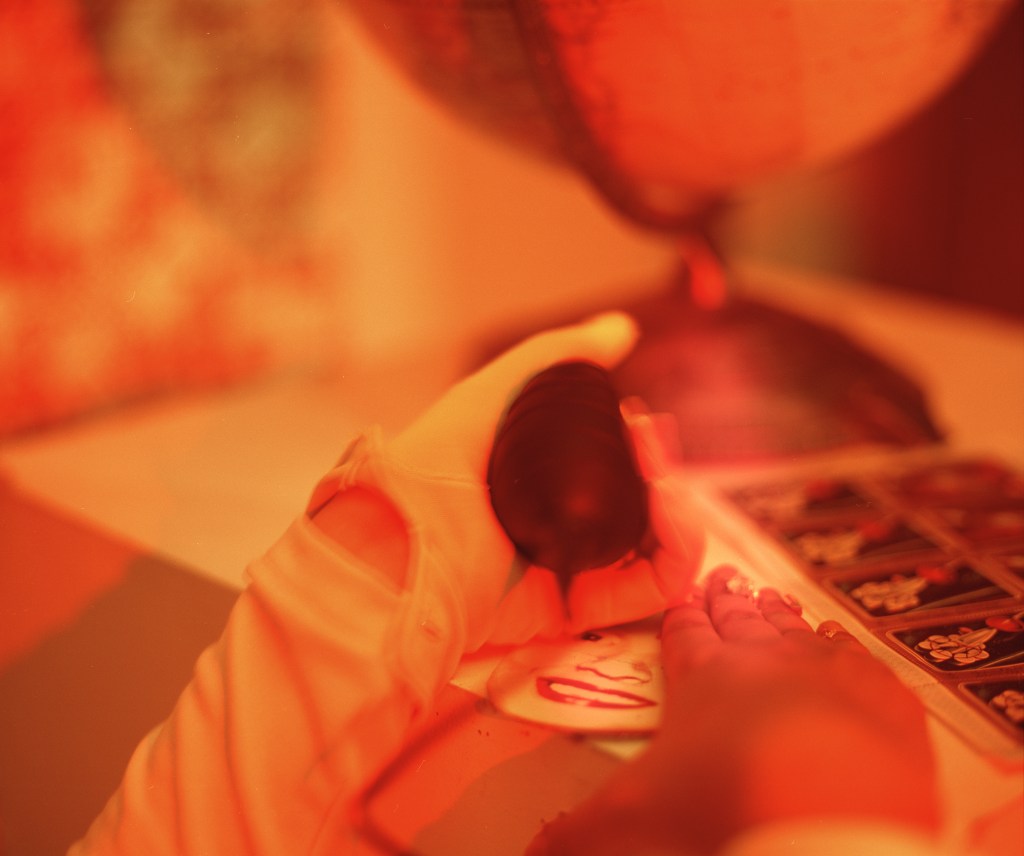
I am obsessed with my mother, and she is obsessed with her daughter in America. One day, she asked me to send a photograph of an American papaya to compare it with an Indian one. I wonder why that interests her. I do little experiments with her. During our daily calls, I try to spark debates just to elicit a reaction.
“What were you wearing in the photo you sent me? Is it a shirt or a jacket? Your dad says it looks like a jacket.” I said, “It is definitely a shirt.”
“It is a shirt. I am thinking of going on a solo trip.”
I am not. I don’t know why I said that.
Perhaps it is to ensure that she is still the same and that I remain the apple that fell far from the tree. An extraterrestrial.

However, despite this status of otherness, I cannot stop thinking about her. I think about her smile. The longer I look at it, the more exhausting it gets. It is flawless. Her cheeks rise perfectly to form these masterly smile lines. I almost never smile in photographs. But for her, I do.
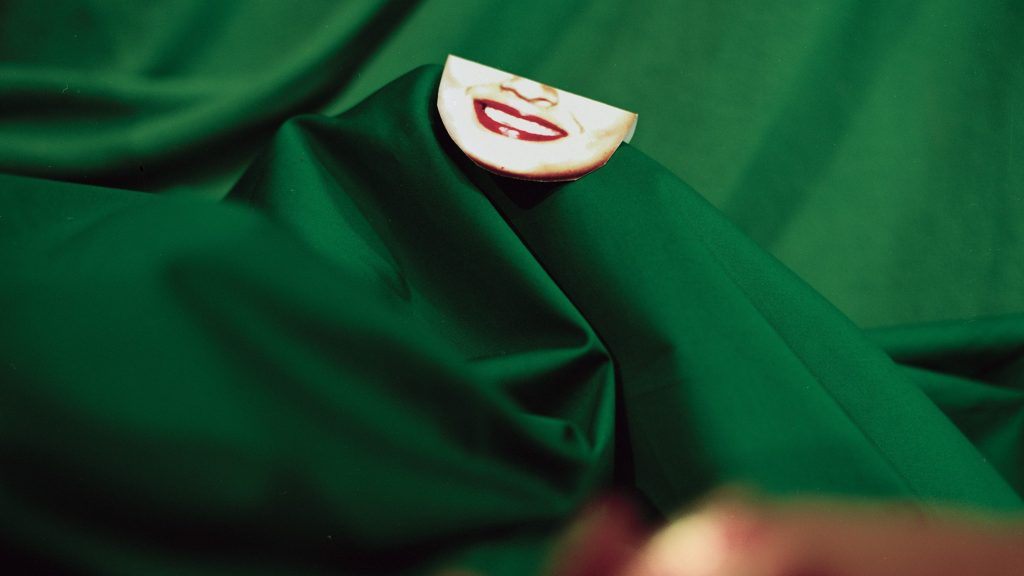
I am rarely interested in smiling subjects. But she is an exception. So, I cut out her smile and put it on a mountain. She can relieve her muscles, and I can rest for a while.

The block pattern behind her catches my eye. I have the urge to tear through it. But I can’t. In one of her photographs, her dupatta mimics the cape, and she is captured like a superhero—a lazy term that has been enough to barter women’s labor for decades—holding my sister, surrounded by me and my cousins. She has internalized this label and wants me to distinguish her as a celestial being. I tried hard, but I could never give her that perception, amongst other things that she desired from her perfect daughter. I am not perfect, but I could be if I feasted on her conception. She loves telling people that I am a lamb. She can’t admit she birthed a hyena.
She wanted to be seen as celestial, but I never gave us that. I couldn’t. I refuse to turn us into something untouchable, something beyond flaw and failure. To place us on a pedestal would mean denying our complexity, the rawness that makes us real.
I am outrageous. I am cruel. I am self-indulgent.
And I am a lamb.

In pursuit of smiling women, I found myself in Paris, standing before the Mona Lisa, whose “enigmatic smile” drew a mob of phone cameras from all over the world. I had come to Paris to attend a conference on cognitive capitalism. I did not care for it. I just wanted to see Paris before I turned twenty-seven.
It was a huge moment for my mother. She cannot believe I get to travel to places, symbolic of an accomplishment, for work. She described me as “lucky” the day I got there.
It bothered me.
My mother, her mother, her late father, and I are the only members of the family to have travelled internationally. My mother’s first flight was two years ago. She was fifty then. Men in my immediate family haven’t travelled enough. I believe that is the reason they lack vulnerability and patience. I cannot imagine them waiting in lines for the security check or taking off their shoes or raising their hands to be searched. They don’t soften their bodies like that.
After joining the crowd and waiting for about ten minutes, I was in front of the rope barrier, enchanted by the great Mona Lisa. The experience reminded me of throngs of worshippers visiting a temple for a darshan of the deity. A deity so powerful that a mere look at the sculpture promised divine success. She became my deity then.
I was wandering the hallway right outside the room that hosted the Mona Lisa when I saw La Charité, a sixteenth-century painting by Andrea del Sarto commissioned by a French king, which depicted the theological virtue of charity reaffirming the central purpose of a woman’s life: motherhood. La Charité, arms full of children, embodied nurture and sacrifice—a sacred duty imposed on women.

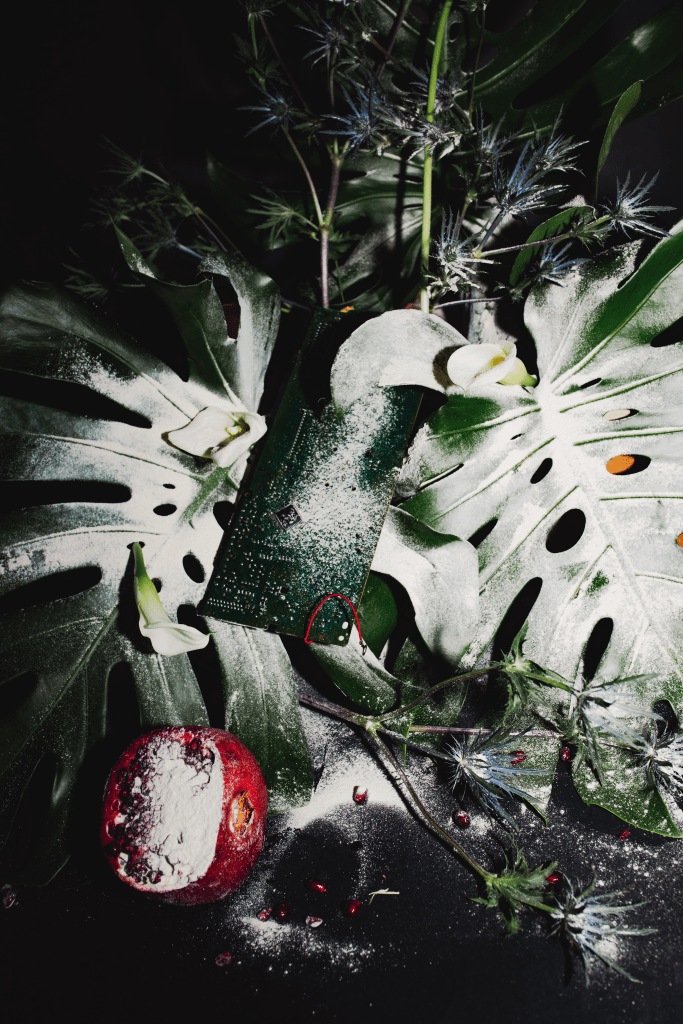
There was something about the allegorical figures that reminded me of the superhero photograph. Perhaps it was Charité’s exhaustion that felt familiar. Perhaps Charité was tired of the suckling child, with another one sitting on her knee and another sleeping at her feet, and could not believe that she had given birth to the dauphin. Perhaps she meant to throw the pomegranate that is featured in the foreground, at the easel, to disrupt the painter that put her in this uncomfortable stance. Further, being a mother muse had depleted her. She wasn’t going to transform into an influencer.
Her revolt impressed me; it wasn’t just exhaustion—it was defiance. A refusal to be trapped in a role that drained her. In her resistance, I saw my own—a quiet fury against expectations I never chose. And she then became my deity.
I see parts of me and the woman who carved me when I encounter images, paintings, sculptures, or almost anything. There is no escape. It consumes me. I love it.
Kanishka Puri is an NYC-based artist and writer who uses feminist futurist aesthetics to quash narratives that dominate her personal family archive. When not writing or making or talking to her mother, she is taking care of her slime molds.
 backmattermag.org